
Home › Altitude training › Cycling
Hypoxia for cyclists: altitude training without leaving home
Hypoxia training for cyclists means breathing air with less oxygen, at normal pressure, to trigger the same blood and metabolic adaptations as an altitude training camp, but from your own home. You can sleep at altitude (a tent over your bed or an altitude room) and do mask sessions on the turbo trainer. You decide how many metres, how many hours and at what point in the season.
Cycling physiology
What cycling demands and where altitude helps
In road and mountain biking, your competitive edge comes down to three critical factors: the volume of oxygen your blood can carry to your legs, how long you can hold power near your functional threshold on a long climb, and how fast you recover to perform the next day. Hypoxia acts on all three:
More haemoglobin mass
When you accumulate nights sleeping at altitude, your kidneys release more natural erythropoietin (EPO), stimulating the production of red blood cells. A meta-analysis by Gore et al. (2013) estimated an average increase of close to 1 % in haemoglobin mass for every 100 hours of well-dosed exposure.
Better muscle efficiency
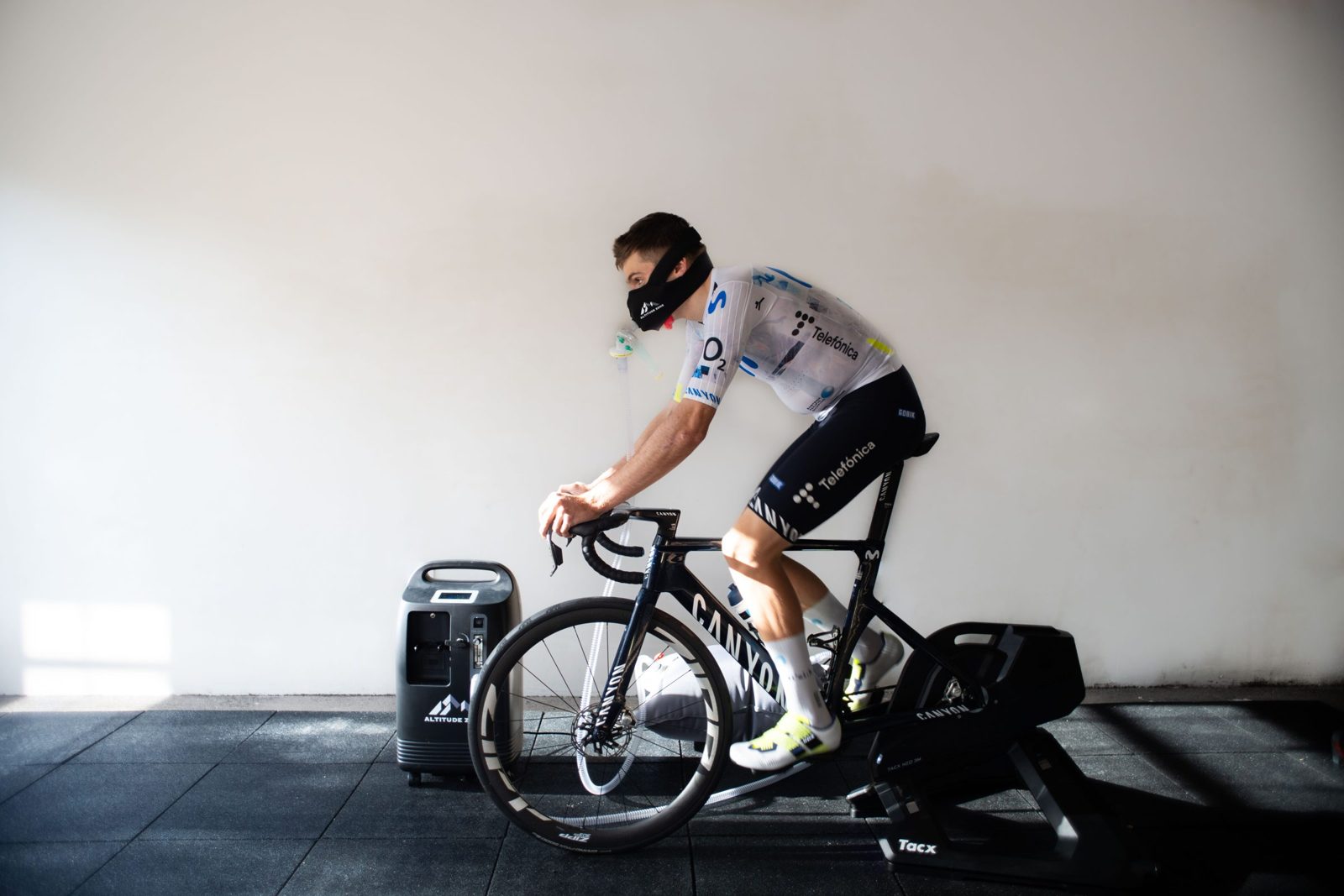
Intermittent hypoxic sessions on the turbo trainer (IHT) drive peripheral adaptations in the working muscle fibres: higher mitochondrial density, more capillaries and better lactate recycling in repeated efforts above threshold.
Recovery between blocks
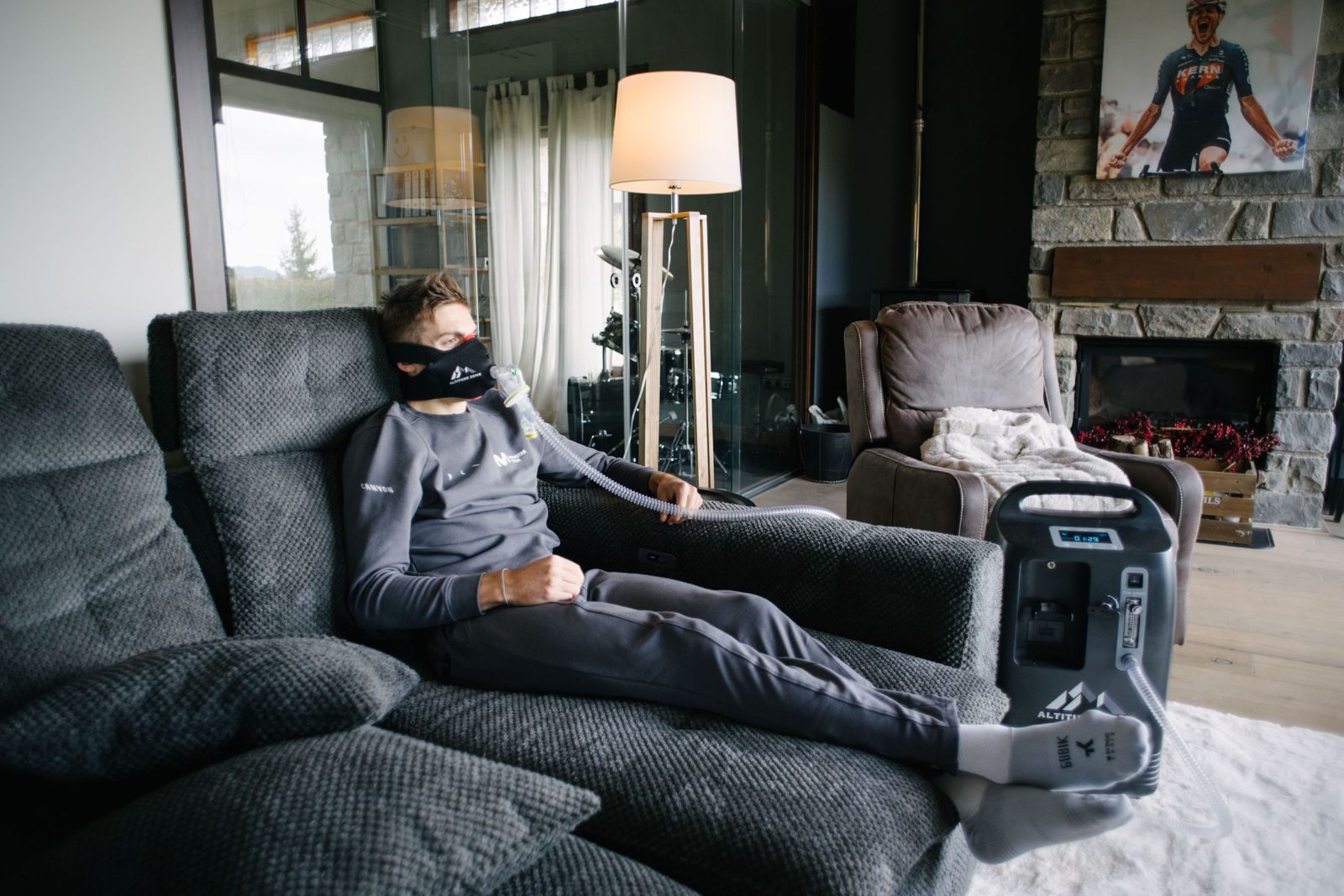
Seated mask sessions (IHHT at rest) let you keep the altitude stimulus during recovery weeks, travel or joint niggles, without adding mechanical fatigue or neuromuscular strain on your legs.
A note on individual response: The blood response varies from one cyclist to another. That's why we monitor your overnight saturation with a pulse oximeter and guide your progression based on your blood tests and how you actually feel.
Altitude protocols
Three ways to train at altitude, in this order
For a cyclist, the order from greatest to least cumulative impact on performance is:
Sleeping at altitude (Live High, Train Low)
You sleep at 2,000 to 3,000 m simulated altitude for 8–9 hours a night and train low at your normal altitude with your usual quality and watts. It's the method with the most scientific backing since the study by Levine and Stray-Gundersen (1997).
Intermittent hypoxic training (IHT)
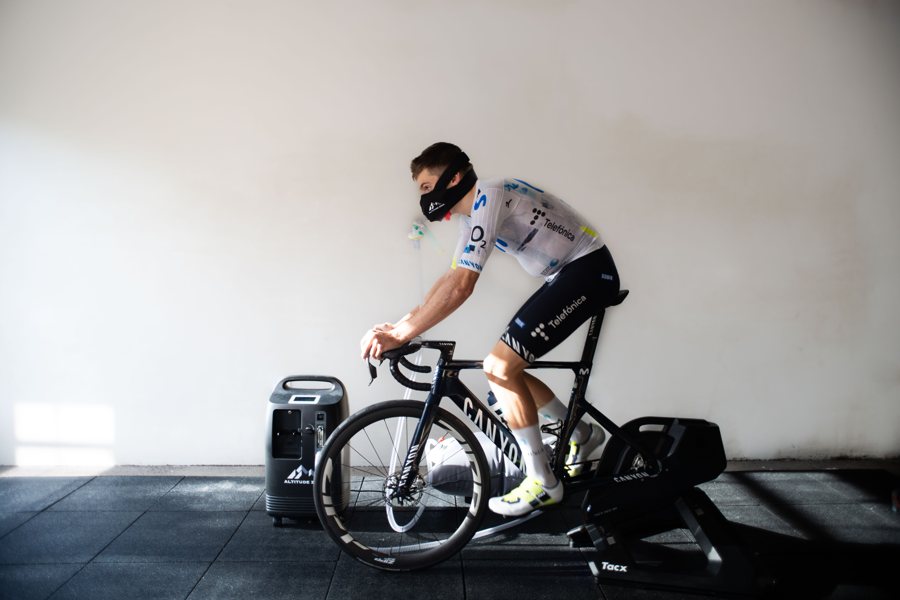
Two sessions a week on the turbo trainer with a sports mask, usually a warm-up and controlled sets or intervals at the set altitude. You add metabolic stimulus without changing your outdoor training plan.
Intermittent hypoxia at rest (IHHT)
Sitting in an armchair with a mask, alternating cycles of low-oxygen air and oxygen-enriched air. Ideal for active rest days, travel or taper weeks before a cycling event.
Periodisation
What your cycling season would look like
A rough guide to integrating altitude across the different phases of the cycling year:
| Season phase | What we do with hypoxia | Approximate duration | Main goal |
|---|---|---|---|
| Pre-season (winter base) | Sleeping at altitude, climbing progressively from around 2,000 m. | 3 to 4 consecutive weeks | Raise haematocrit and haemoglobin mass to build the year's aerobic base. |
| Pre-competition quality block | Sleeping at altitude + 2 IHT sessions a week on the turbo trainer with a mask. | 3 to 4 weeks | Adapt your muscles to working with less oxygen and raise VO₂max at threshold. |
| Before a sportive or stage race | Final altitude block ending 7 to 10 days before the race. | Depending on race date | Arrive with peak red blood cells on race day and no residual fatigue. |
| During competition or a recovery week | Occasional IHHT sessions at rest with a mask. | 1 to 2 sessions a week | Mitochondrial stimulus without adding fatigue to your legs. |
Live in Andorra or already at altitude?
Many professional and amateur cyclists live in elevated areas (Andorra, Granada, etc., between 1,000 and 2,000 m). However, to trigger a significant blood response, the overnight stimulus usually needs altitudes of 2,400 to 2,800 m. Altitude training at home lets you sleep at the optimal altitude of your choice without travelling to mountain passes or putting up with the winter cold.
Official equipment
What equipment you need
Choose the solution that best fits your home, space and budget:
| If you're looking for... | We recommend | What's included | Official price | Action |
|---|---|---|---|---|
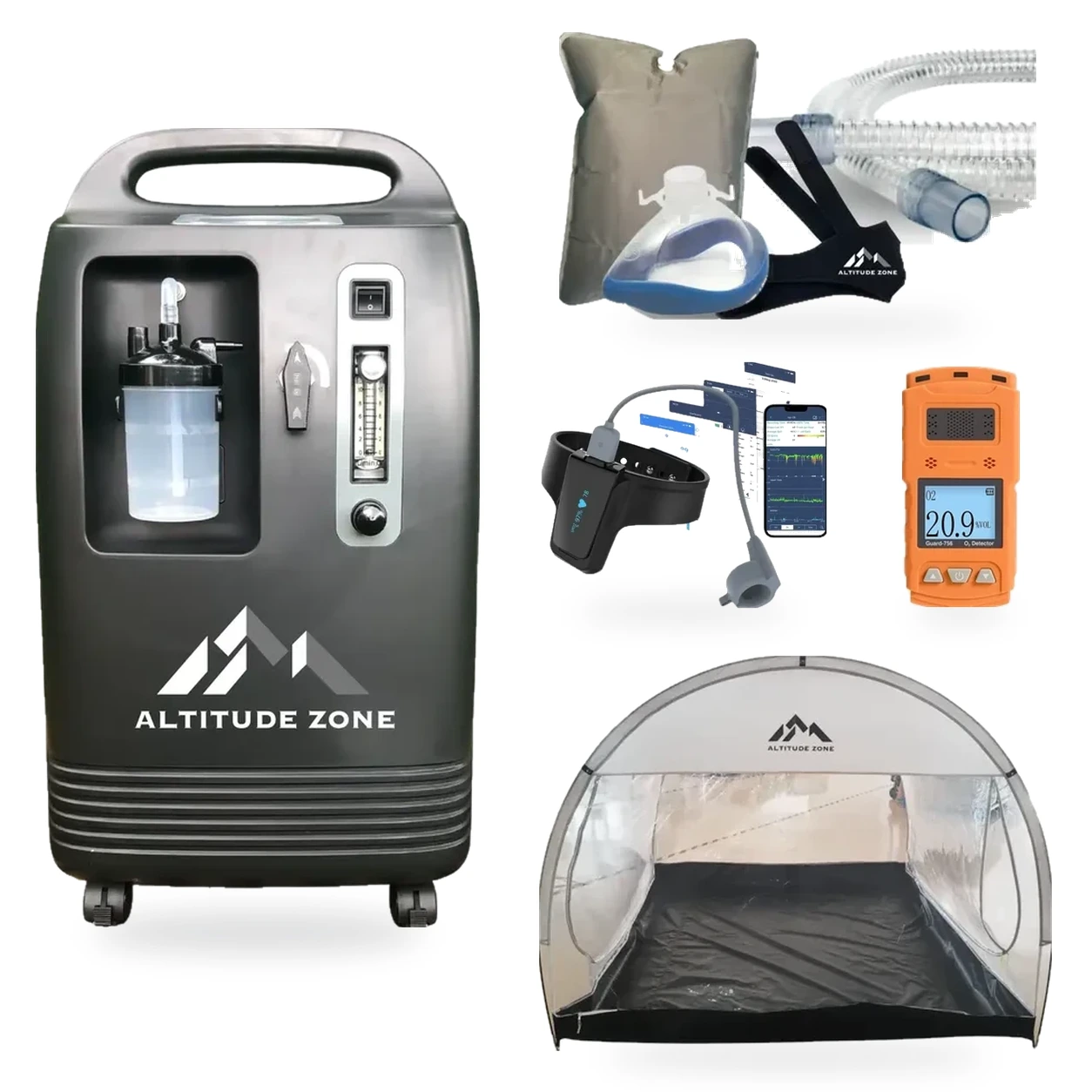
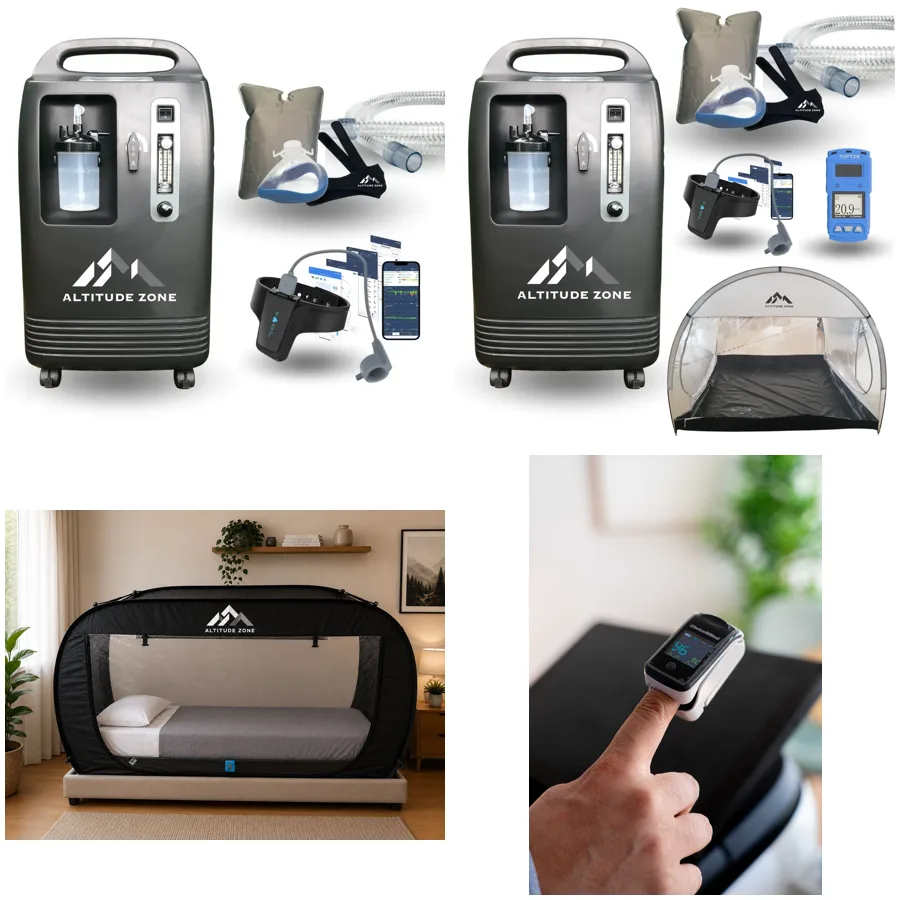
| Start sleeping at altitude with no building work | AZN VO₂max Victory Pack | 100 L/min portable generator + tent for your bed (size of your choice) + turbo trainer mask + pulse oximeter + ambient O₂ sensor. | €3,300 (VAT included) | See Victory Pack |
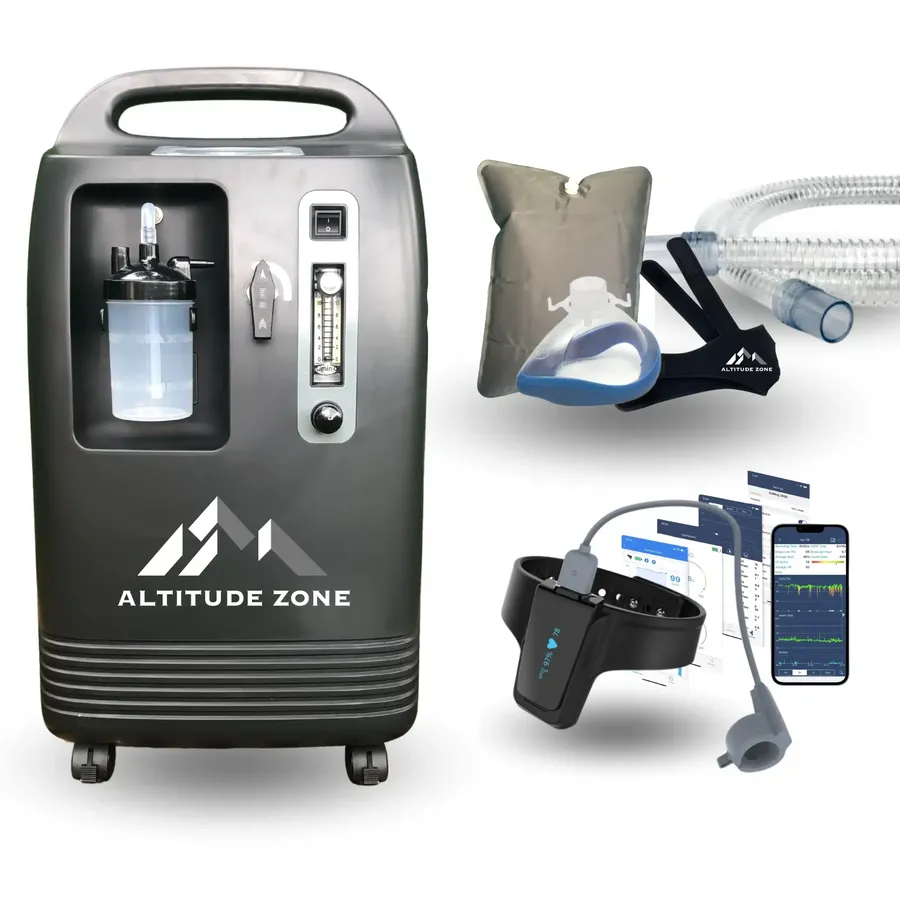
| Mask sessions only, on the turbo trainer and at rest | AZN VO₂max IHHT Pack | 100 L/min portable generator + intermittent hypoxia mask circuit + reservoir bag + wrist pulse oximeter. | €2,850 (VAT included) | See IHHT Pack |
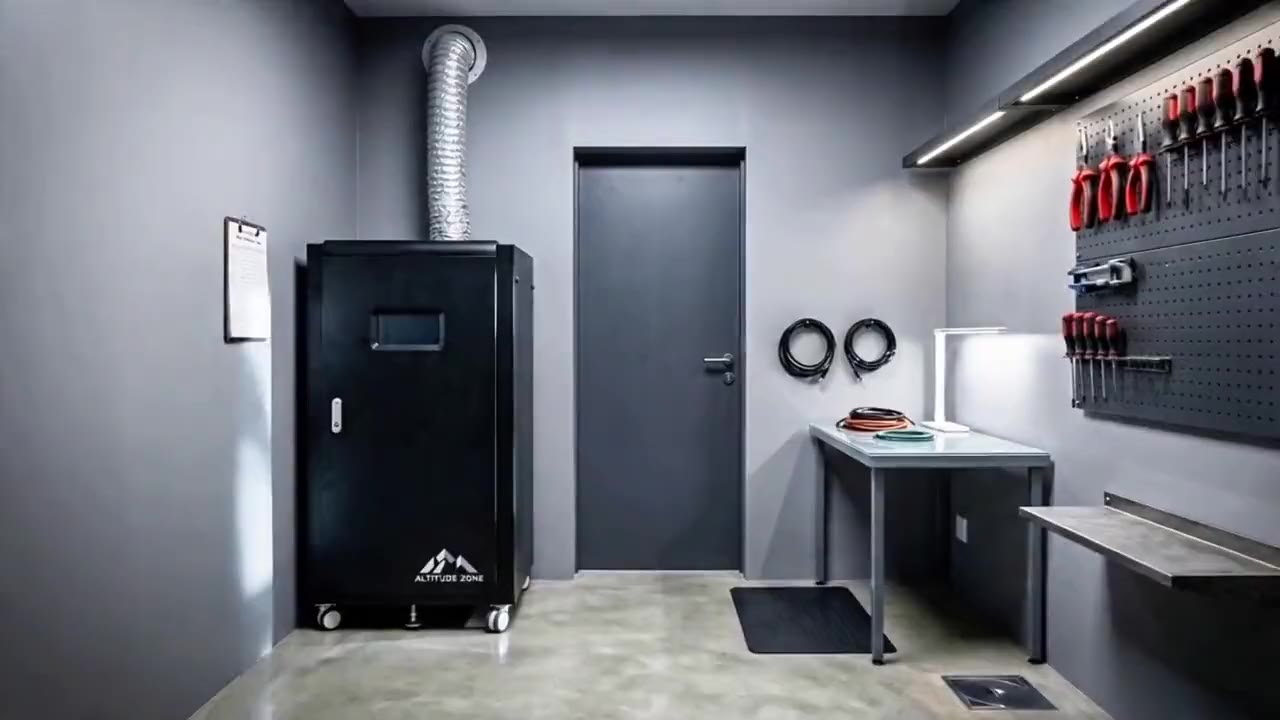
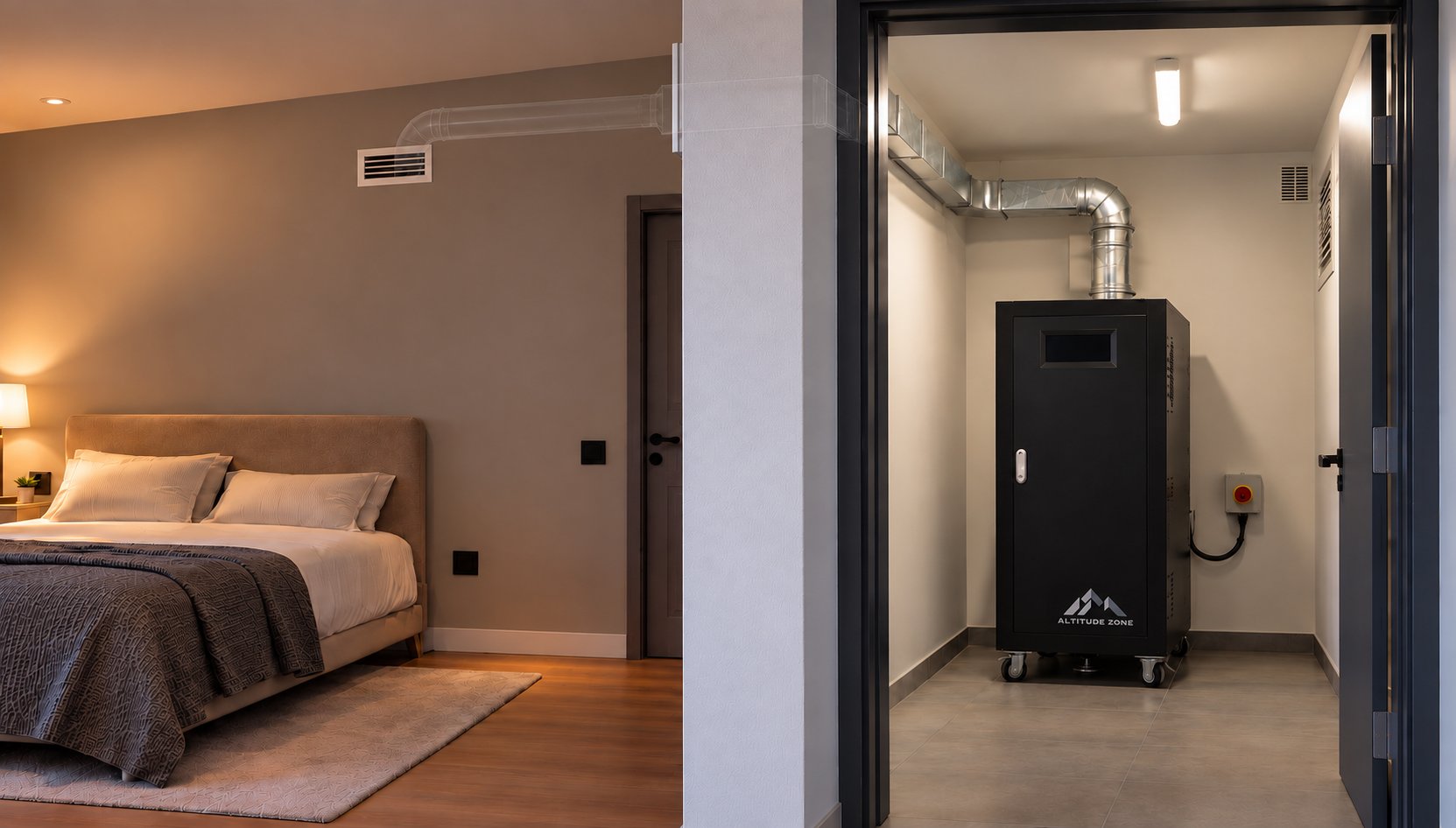
| Maximum comfort and consistency all season | Installed altitude room | Room assessment, high-capacity generator outside the bedroom, digital wall controller and turnkey installation in 24 h. | From €8,000 + VAT (custom) | See room |
Safety and common questions
Cyclists' FAQ
When will I notice the effects on the bike?
Adaptations in haemoglobin mass and red blood cells require accumulated hours of exposure. With around 3–4 weeks of consecutive nights (more than 180 accumulated hours) you reach measurable gains. On the bike, most cyclists notice less breathlessness on long climbs and faster recovery between intervals from the third week onwards.
Does it affect the quality of my road training?
No. That's the big advantage of the Live High, Train Low protocol: by sleeping at altitude but riding outdoors at your usual altitude, you keep the same watts, cadence and peak power as always, without the drop in intensity that comes from training on real mountain tops.
What's the difference between the tent over the bed and the room?
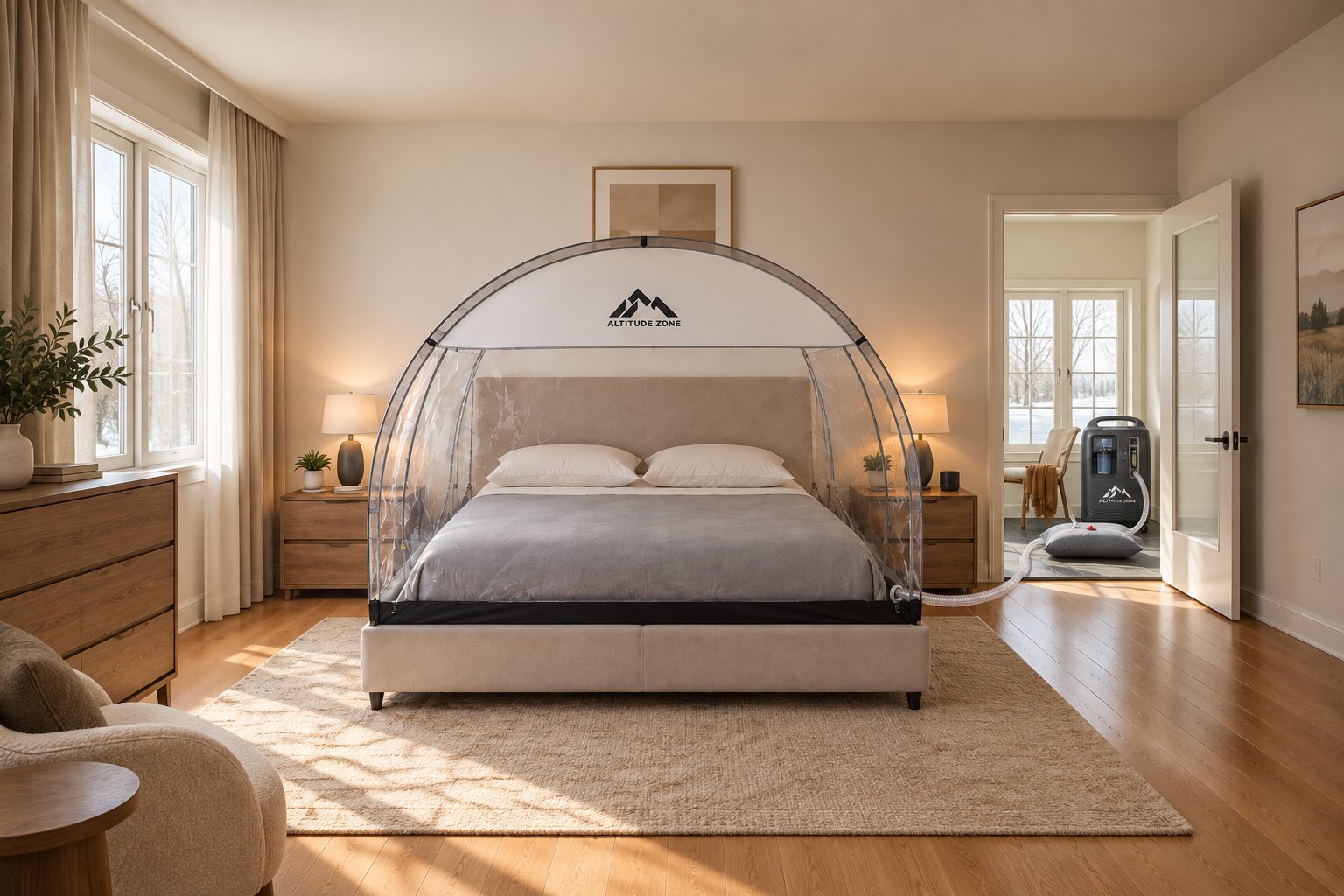
The tent is portable and needs no installation: it sets up over your mattress and is the most accessible option. The altitude room conditions your whole bedroom, with the compressor placed in another room (storage room or garage): you sleep in an open bedroom, with no build-up of heat and maximum comfort.
Can I take the equipment to a training camp or race?
Yes. Both the Victory Pack generator and the tent are portable. They have wheels and fit in a car boot, so you can keep up your altitude routine in hotels or holiday cottages.
Is normobaric hypoxia legal in cycling competition?
Yes, completely. Training and resting in normobaric hypoxia (simulating altitude by changing the O₂ concentration at normal atmospheric pressure) is permitted and does not appear on the World Anti-Doping Agency (WADA) list of prohibited substances or methods. It's a method routinely used by UCI WorldTour teams.
- Levine BD, Stray-Gundersen J. "Living high-training low": effect of moderate-altitude acclimatization with low-altitude training on performance. J Appl Physiol, 1997. PubMed 9216951
- Gore CJ et al. Altitude training and haemoglobin mass from the optimised carbon monoxide rebreathing method determined by a meta-analysis. Br J Sports Med, 2013. BJSM Abstract
Cycling advice
Design your protocol for this year
Tell us your goals and your race or sportive calendar, and we'll advise you, with no obligation, on the right weeks and equipment.