

Home › How it works
Altitude training
Altitude training at home: the mountains, whenever you want
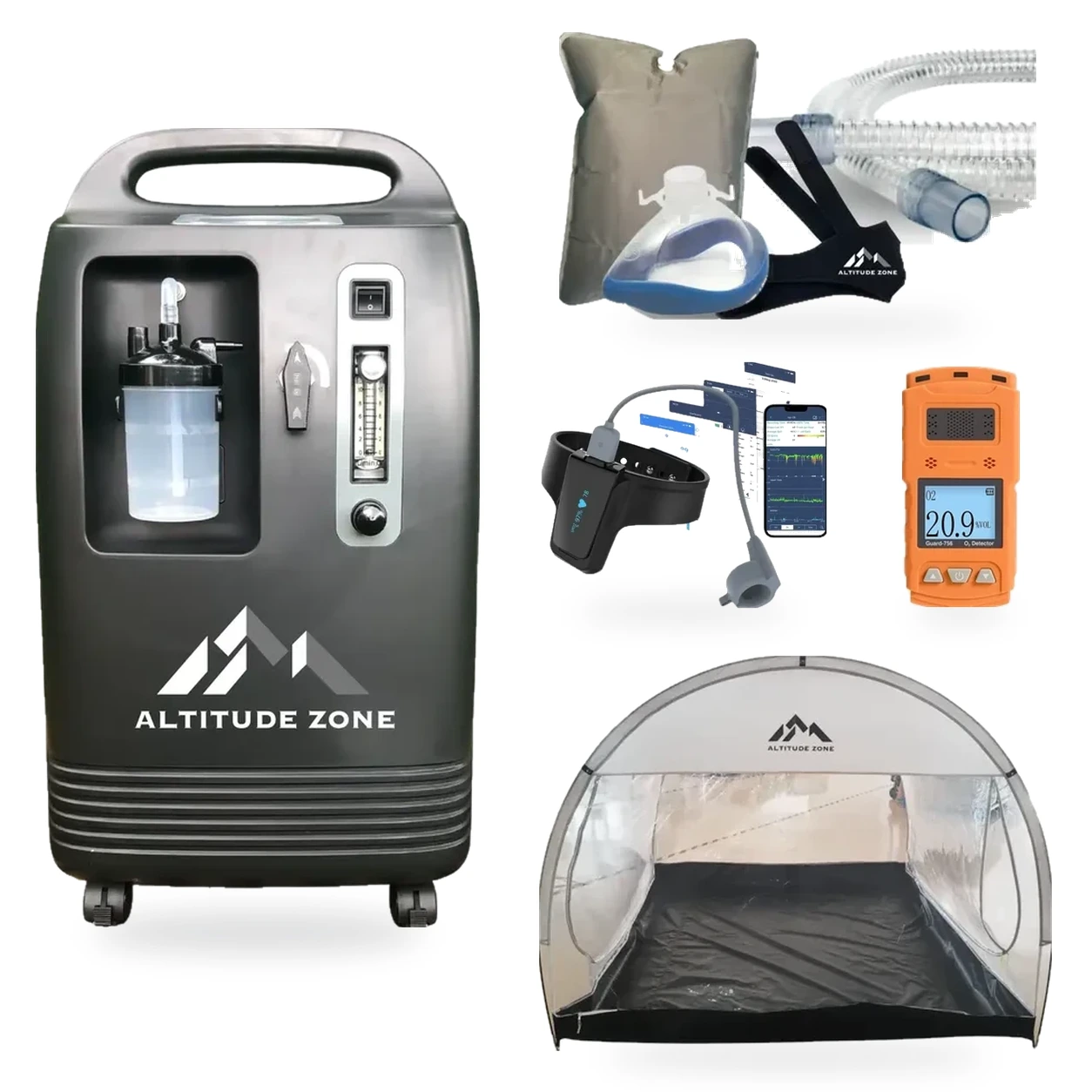
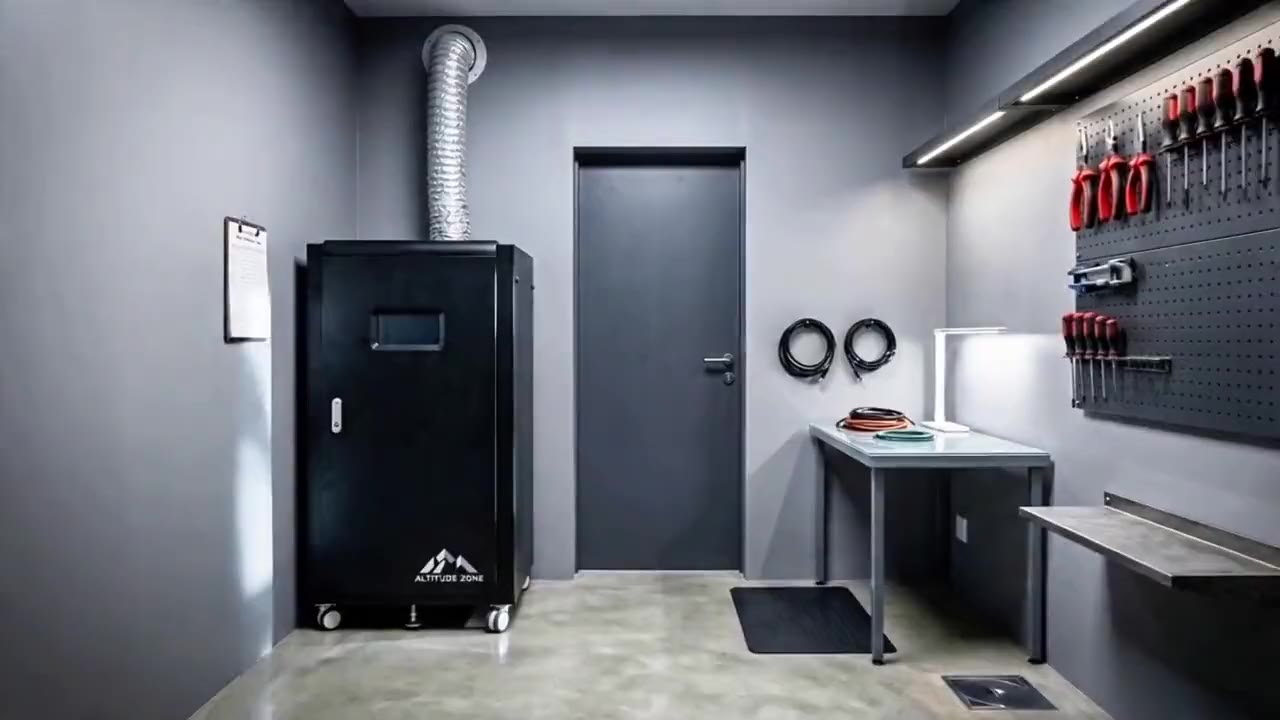
Breathing air with less oxygen forces your body to adapt. We simulate that altitude at home, in the gym or at the hotel, and you choose how and when to go up.
Improvement profile
What each type of hypoxia boosts
The three forms of hypoxia work on the same body, but each one puts the focus somewhere different. We only show the improvements backed by science for each type. Choose the type of hypoxia and tap each improvement to see the study and the body system involved.
Sleeping at altitude is a very powerful stimulus: we adjust the protocol and your training loads so you don't build up fatigue in the central nervous system.
Approximate scale based on studies with athletes and on our experience; the figures for each improvement come from the cited study. Response varies from person to person. Anatomical systems: Z-Anatomy and BodyParts3D (CC BY-SA 4.0).
Four ways to go up
Choose your type of hypoxia
Each type has a different goal. Many athletes combine them throughout the season.
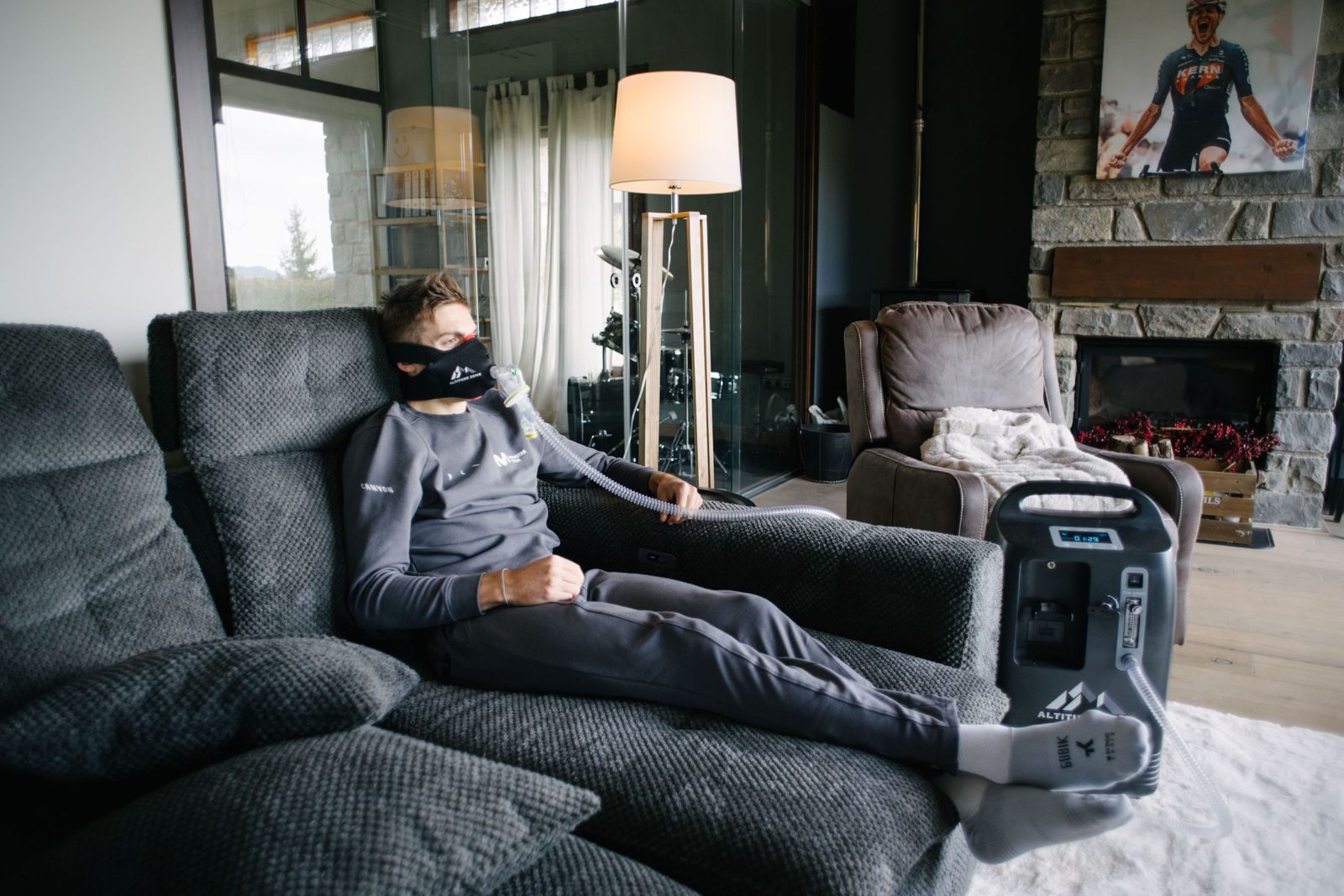 About 45 min · seated
Intermittent at rest
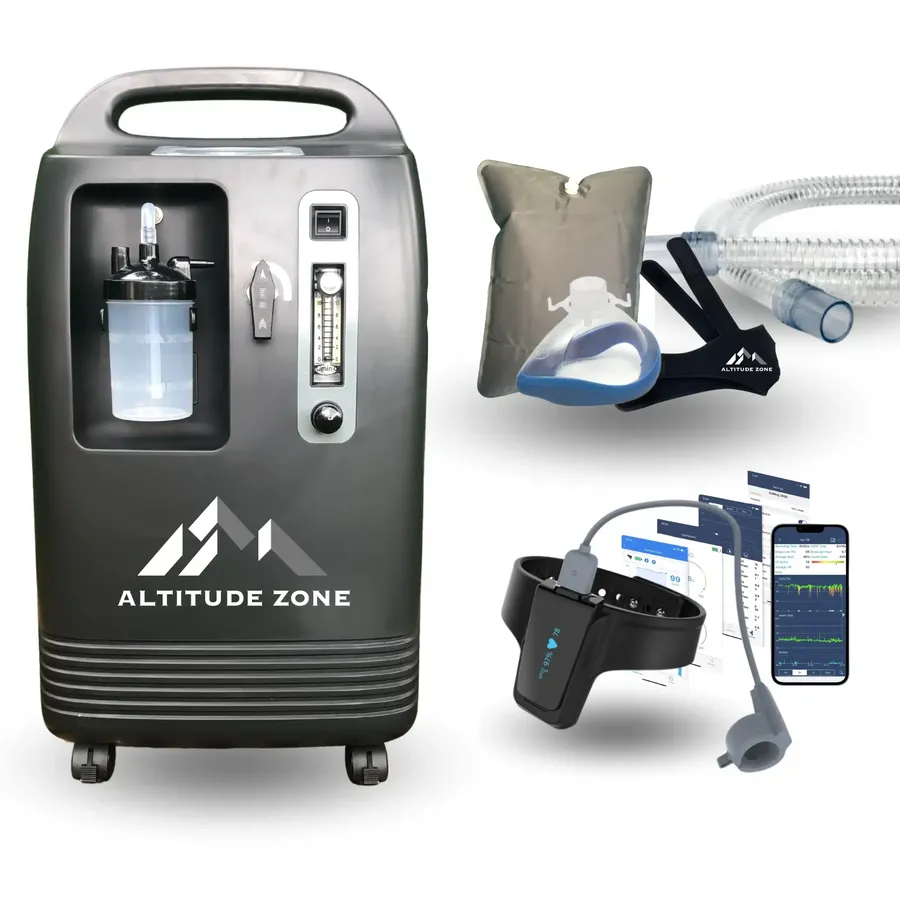
You breathe through a mask, alternating hypoxic air and normal air, sitting on the sofa.
- You recover faster after training
- Improves mitochondrial efficiency
- Increases haemoglobin
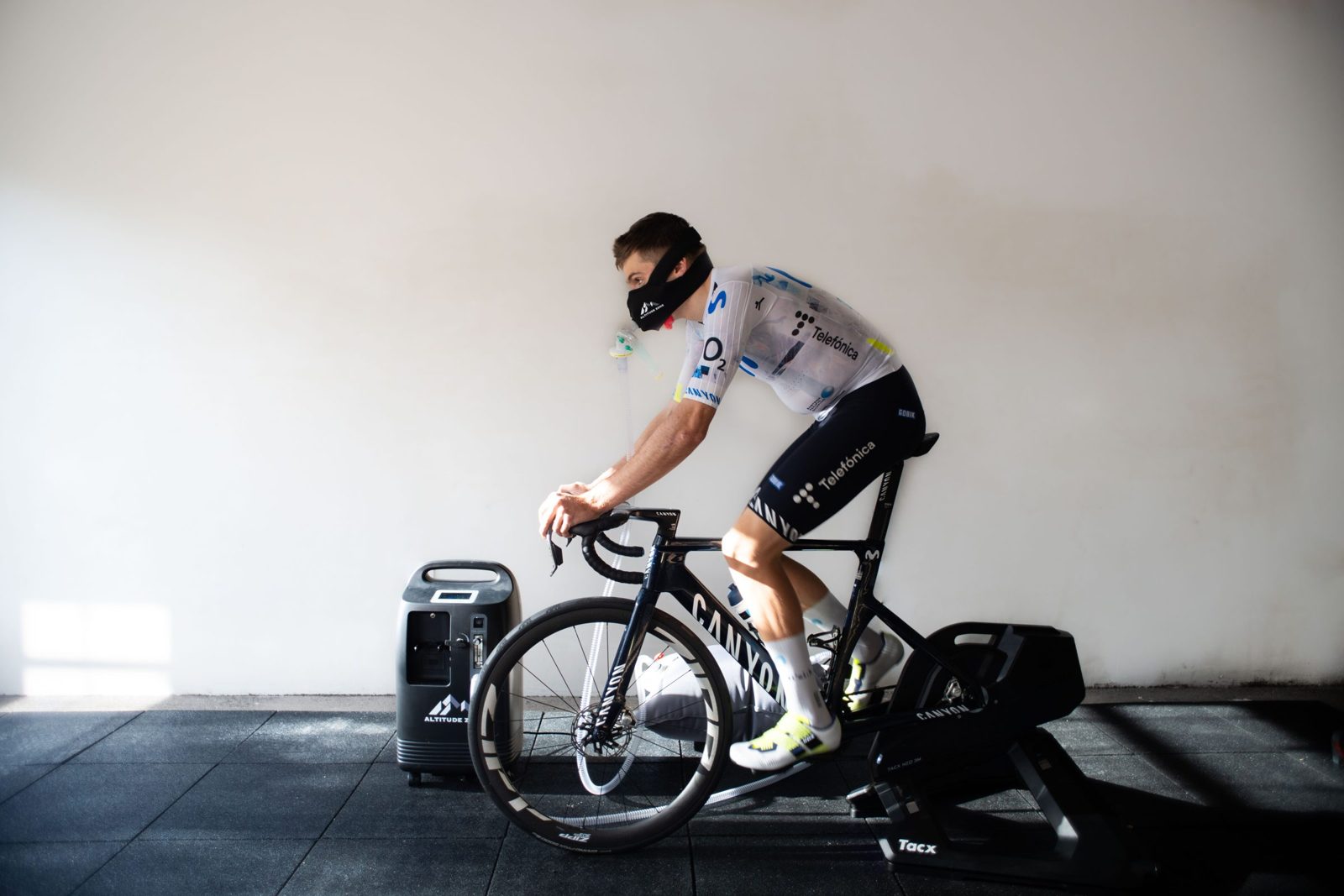 While you train
Intermittent during exercise
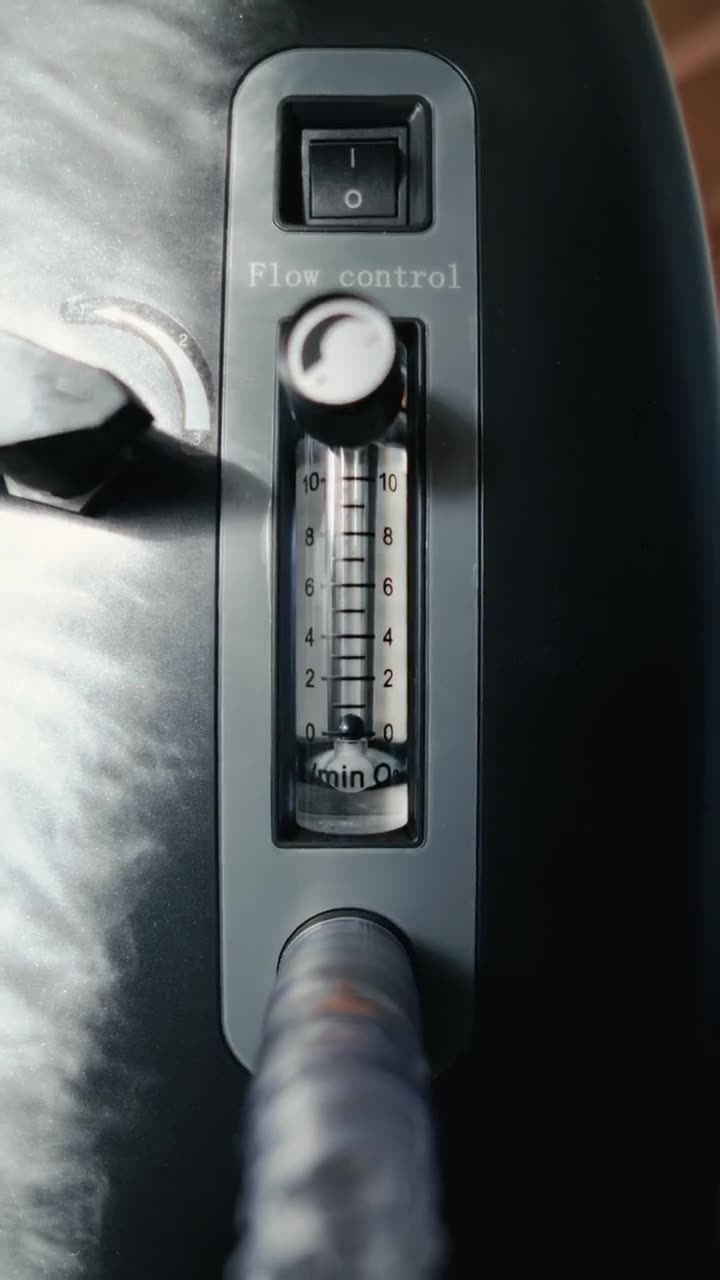
You train on a turbo trainer, treadmill or in the gym breathing altitude air.
- Increases VO₂max
- Greater muscle metabolic efficiency
- You adapt to competing at altitude
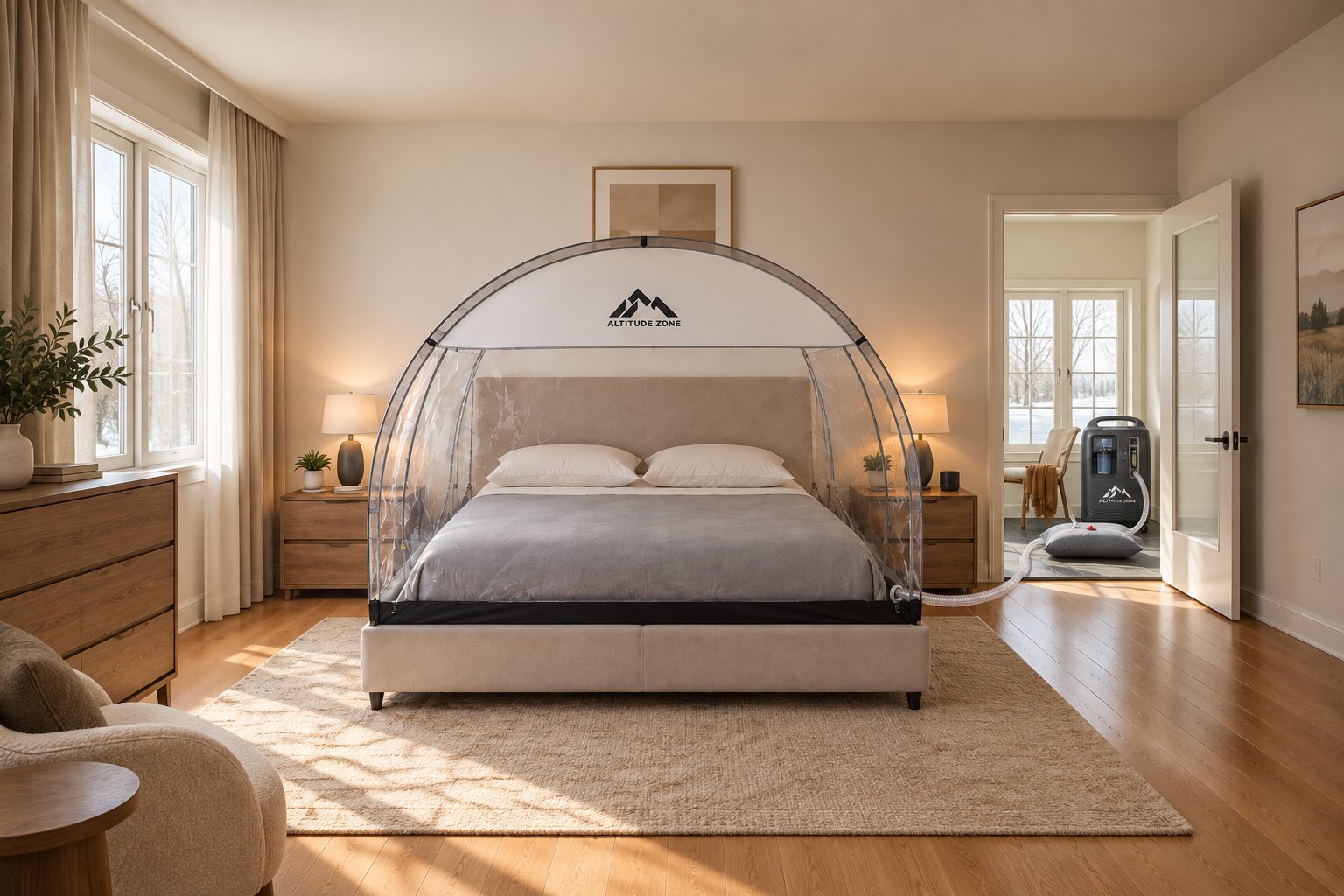 All night · in your bed
During sleep in a tent
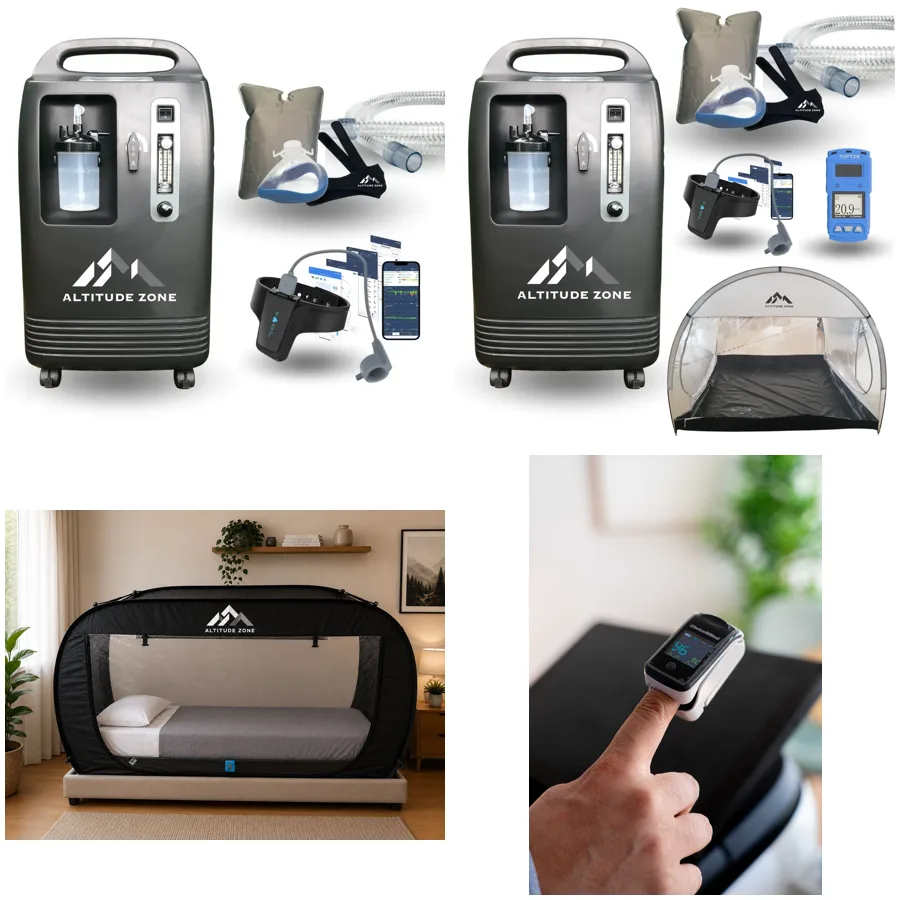
You sleep at altitude inside a tent that you set up over your own bed.
- Increases haematocrit
- Improves VO₂max and capillarisation
- You live high and train low
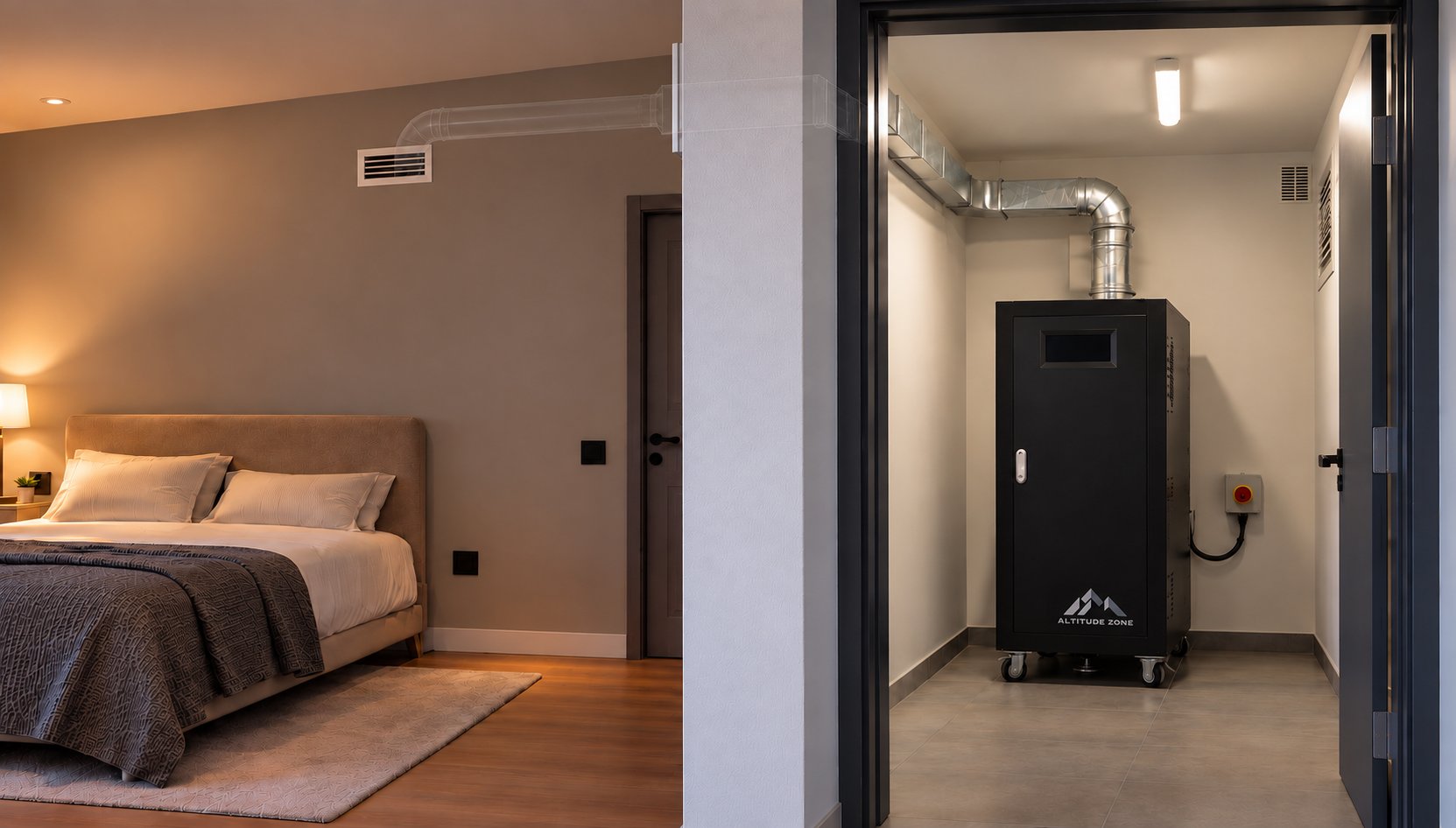 All night · no tent
During sleep in a room
The whole room at the altitude you choose, controlled from a screen on the wall. As simple as air conditioning.
- Increases haematocrit
- You sleep without a tent, in total comfort
- For several people: couples, families or teams
Free assessment
Shall we talk about your altitude?
Tell us your goal and your dates. We'll suggest the equipment, the protocol and a quote, with no obligation.
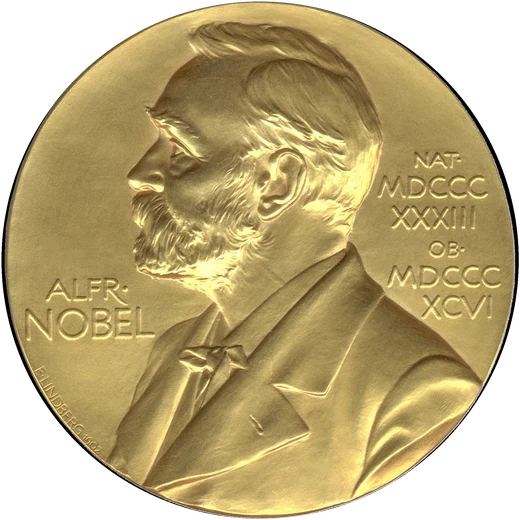 Nobel Prize in Physiology · 2019
The discovery that changed everything
A Nobel Prize explains why less oxygen makes you stronger.
In 2019, Kaelin, Ratcliffe and Semenza won the Nobel Prize for discovering how your cells detect a lack of oxygen. When they sense it, they flip a master switch called HIF. And that switch puts your whole body to work.
More red blood cells
HIF activates EPO, the hormone that makes red blood cells. It's exactly what cyclists are after when they head up into the mountains to train.
New blood vessels
It triggers the growth of new capillaries so oxygen reaches every muscle fibre.
More efficient cells
It changes how your cells produce energy so you get more out of the oxygen they have.
Flipping that switch no longer means climbing to 3,000 metres. We do it in your living room, in your bed or in your gym.